


Ant Control Strategies: Managing the Spring Foraging Vanguard

In the Central Ohio ecosystem, the first sign of the Biological Awakening is not always a swarm of termites or the buzzing of a wasp; more often, it is a single, solitary ant wandering across a granite countertop. To the untrained eye, this is a nuisance. To a technical specialist, this is the arrival of the Foraging Vanguard.
As we explored in our foundational guide, The Biological Awakening: A Technical Guide to Spring Pest Prevention, the shift from winter to spring triggers a metabolic reset. For ant colonies—specifically Odorous House Ants (Tapinoma sessile) and Carpenter Ants (Camponotus)—this reset signals an immediate need for resources to fuel colony expansion.
To secure your home, you must understand the mechanics of how these scouts operate and why a traditional "spray" approach often fails to disrupt their high-speed highways. Here are some of our top ant control strategy tips.
1. The Anatomy of a Scout: The Pheromone Blueprint
Ants do not wander aimlessly. They are governed by a sophisticated system of chemical communication. In early spring, colonies send out "scout" ants—the vanguard—to locate reliable sources of moisture and protein.
The Recruitment Loop
When a scout discovers a resource (like a leaking pipe behind a kitchen sink or a bowl of pet food), it returns to the colony while pressing its abdomen against the surface. This action deposits a trail pheromone—a volatile chemical breadcrumb.
As more workers follow this path, they reinforce the trail with their own pheromones, creating a "positive feedback loop." Within hours, a single scout can recruit thousands of workers. These scouts can travel over 100 feet from the primary nest site, meaning the source of your infestation may be located well beyond your property line.
The Micro-Climate Variable: Vapor Pressure Deficit and Pheromone Persistence
The efficiency of this recruitment loop is heavily dictated by the Vapor Pressure Deficit (VPD) within your home's wall voids. During mild spring days, when Central Ohio homeowners often leave HVAC systems dormant, the humidity in interstitial spaces rises, causing the VPD to drop. This creates a "tropical micro-climate" that serves two purposes:
Desiccation Shielding: High humidity mitigates the risk of water loss for the Odorous House Ant. This allows foragers to maintain peak operational velocity and extended search times that would be lethally dehydrating in a drier environment.
Trail Stabilization: While temperature drives the decay of the volatile lipids in a pheromone trail, the high ambient moisture of a wall void prevents the substrate (the surface the trail is on) from absorbing or breaking down the scent map as quickly. This allows the vanguard to maintain a high-intensity "chemical highway" with minimal energy expenditure.

The "Smarter" Detection Tip
Professional monitoring focuses on these invisible highways. We look for trailing behavior along structural "guidelines" like baseboards, electrical conduits, and plumbing lines. If you see ants moving in a straight, determined line, you are looking at an established recruitment loop that requires structural disruption, not just surface cleaning.
2. Species Spotlight: The Primary Spring Threats
In New Albany and Westerville, two specific species dominate the spring landscape. Each requires a different strategic response under the 3.S Protection Strategy.
The Odorous House Ant (The Opportunist)
Known for the acrid, coconut-like odor they emit when crushed, these ants are masters of budding.
The Behavior: Unlike species with a single queen, Odorous House Ants often have multiple queens and can "splinter" into satellite nests in response to stress.
The Spring Draw: They are highly attracted to the moisture gradients found in wall voids during the spring thaw.
The Strategic Risk: If a homeowner uses a repellent DIY spray, they may inadvertently trigger "budding," causing the colony to fracture and establish multiple new nests deeper within the home's voids.
The Westerville Bypass
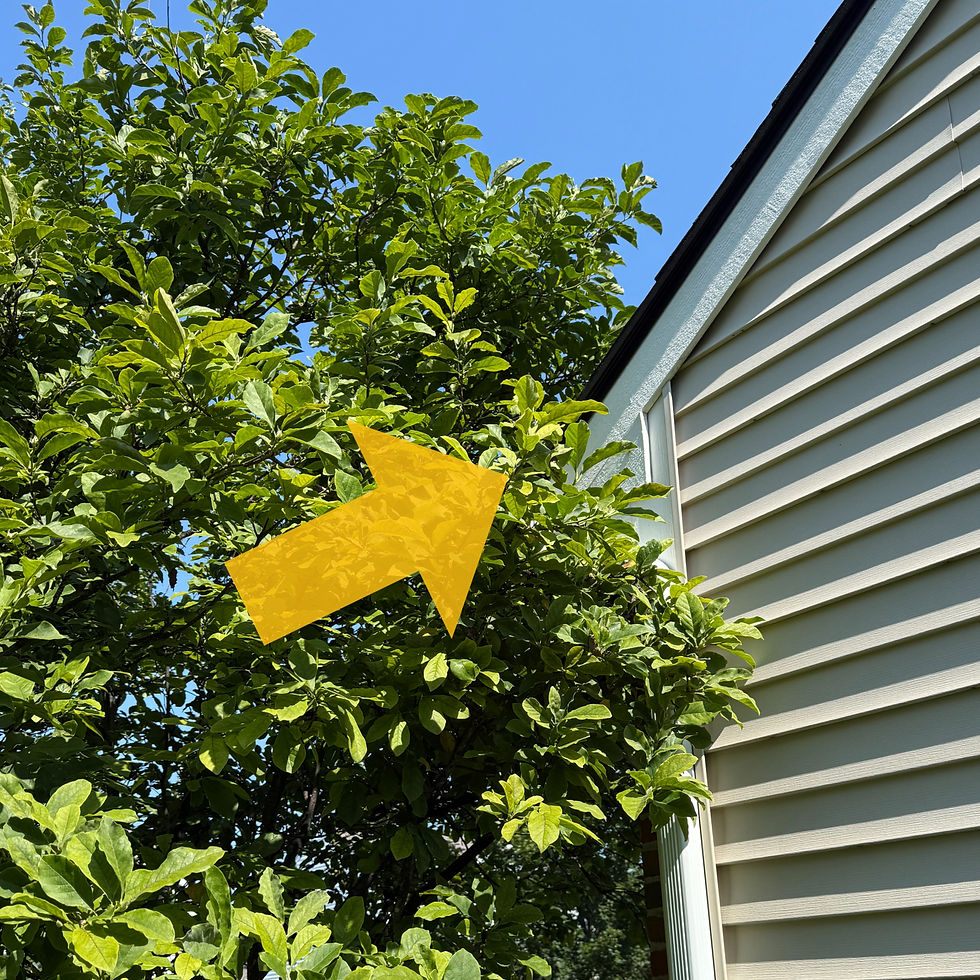
In a recent 3.S Audit at a Westerville residence, we discovered an Odorous House Ant infestation that had bypassed all ground-level defenses. The culprit? A structural bypass created by a tree touching the corner of their garage.
The Carpenter Ant (The Structural Saboteur)
Unlike the Odorous House Ant, the Carpenter Ant does not eat wood; they tunnel through it to create galleries for their young.
The Scale of the Threat: A mature "parent" colony of Carpenter Ants can contain upwards of 10,000 to 50,000 workers. While they begin outdoors in dead wood or tree stumps, they routinely establish "satellite nests" inside homes during the spring.
The Silent Sign: Look for "frass"—a mixture of wood shavings and insect parts—pushed out of small "kick-out" holes in window casings or baseboards.
3. Disruption through the 3.S Protection Strategy
At Home Guard IPM, we manage the Foraging Vanguard by neutralizing their communication and securing your structural envelope.
Smarter: Precision Baiting and Pheromone Deconstruction
Professional control relies on the biological phenomenon of Trophallaxis—the communal exchange of alimentary fluids among colony members. To achieve total colony elimination, we utilize Delayed-Action Chemistry.
The Metabolic Delay: The active ingredients in professional baits are engineered to remain non-lethal for a specific window of time. This allows the Foraging Vanguard to return to the nest and pass the material through the entire population via trophallaxis before the onset of mortality.
The Detection Risk: If a material kills too quickly, the colony detects the localized threat and immediately enters a defensive state. This can result in the "ceasing of foraging" or the triggering of a "budding" event, effectively burying the problem deeper within your walls.
Lipid Deconstruction: Common DIY cleaners like vinegar fail to break down lipid-based pheromones. Our technical approach utilizes specialized enzymatic cleaners to deconstruct these lipids, effectively erasing the colony’s scent map and preventing re-recruitment.
Safer: Strategic Placement and Low-Impact Materials
Our commitment to your family's sanctuary means our protocols prioritize the Volume-to-Efficacy Ratio. We achieve superior results by using the minimum amount of material in the maximum impact zones.
Targeted Void Injection: Instead of broad-spectrum applications on baseboards or countertops, we utilize precision equipment to inject non-repellent materials directly into the wall voids and interstitial spaces where ants nest. This keeps the material contained within the structure and out of your living environment.
Containerized Bait Systems: In high-traffic areas like kitchens and bathrooms, we utilize tamper-resistant stations. These provide a closed-loop system where the Foraging Vanguard enters, feeds, and exits, ensuring that pets and children have zero contact with the active ingredients.
Botanical Alternatives: For homeowners seeking the lowest possible environmental footprint, we offer botanical-based essential oils—such as rosemary and peppermint derivatives—that disrupt the ant's neurological receptors. When integrated with Smarter baiting, these provide an effective, green alternative for Central Ohio families.
Stronger: Structural Shielding and Material Science
A sealed envelope requires industrial-grade materials to withstand the seasonal pressures of Central Ohio. Standard silicone or latex caulk is insufficient; ants can utilize microscopic fissures that develop as these materials dry, shrink, and lose elasticity.
Technical Remediation: We focus on elastomeric sealants and copper mesh backing for utility penetrations. These materials maintain a permanent seal during the expansion and contraction of the Central Ohio freeze-thaw cycle, denying entry to even the smallest scouts.
Landscape Interface Management: Permanent fortification requires the physical separation of the structure from the biological source. Trimming overhanging limbs at least 10 feet from the roofline and maintaining a 6-to-12-inch "dry zone" between mulch and the foundation prevents the formation of "biological bridges" that bypass chemical barriers.

In Central Ohio, high-end curb appeal can often mask a significant structural vulnerability. Lush ornamental shrubbery and thick mulch layers, while aesthetically pleasing, frequently create the "biological bridges" discussed in our Stronger protocol. When vegetation makes direct contact with your siding or foundation, it provides the foraging vanguard with a moisture-rich bypass that renders ground-level liquid barriers ineffective. True fortification requires maintaining the "dry zone"—a 6-to-12-inch gap between your landscape and your foundation—to ensure your garden remains an asset to your home’s value rather than a highway for the colony. Gutter Hydrology: Clogged gutters create saturated debris that serves as an elevated nesting site for Carpenter Ants. By ensuring optimal drainage, we remove the "micro-swamp" conditions that allow satellite colonies to thrive directly above your home's structural timbers.
4. The Spring Ant Control Strategy Checklist for Homeowners
To assist in our 3.S Protection Audit, homeowners should monitor the following high-risk zones:
Pet Food Stations: Ensure dry food is stored in airtight containers and spills are remediated immediately.
The Window Sills: Monitor for "frass" or winged ants (reproductives), which may indicate a Carpenter Ant satellite nest.
Appliance Voids: Check behind dishwashers and refrigerators where warmth and moisture create a "micro-sanctuary."
Exterior Vegetation: Ensure mulch is pulled back at least 6 inches from the foundation and no branches are touching the roofline.

5. Spring Ant Prevention: Frequently Asked Questions
How long does an ant pheromone trail last? If not enzymatically neutralized, a pheromone trail can remain active and detectable by scouts for several days. High-humidity environments (low VPD) further preserve these lipid-based markers, allowing the colony to resume foraging instantly even after a temporary disruption.
Why do I see more ants after it rains in Ohio? Saturated soil creates a "forced migration." As the subterranean water table rises, it floods the nesting sites of many soil-dwelling species, pushing the colonies upward into the dry, stable structural voids of your home.
Can I kill a carpenter ant colony with a perimeter spray? No. Because the parent colony is often located in a tree stump or woodpile 100+ feet away, a perimeter spray only kills the foragers currently outside. Without a bait-driven trophallaxis strategy that reaches the queens, the parent colony remains healthy and will continue to send new vanguards into your structure.
Conclusion: Securing the Perimeter
The arrival of the Foraging Vanguard is a biological certainty in Central Ohio. However, an infestation is not. By understanding the science of pheromone recruitment and adopting the 3.S Protection Strategy, you can transition your home from a target to a fortress.
Are scouts already exploring your kitchen? Don't wait for the recruitment loop to finish. Contact Home Guard IPM today for a technical inspection and neutralize the vanguard before the colony moves in.

Comments